
CKD Online Learning
Confined Space and Gas Testing Awareness
Recognise confined spaces, understand entry controls, atmospheric hazards and gas detector limitations, and respond to alarms without creating another casualty.
Self-paced · Saved progress · CKD completion certificate
AUD $89.90 per learner · one-time payment at checkout
Checking course availability…
Enterprise enrolment available ↗
Purchase up to 5,000 learner seats and track your workers’ progress.
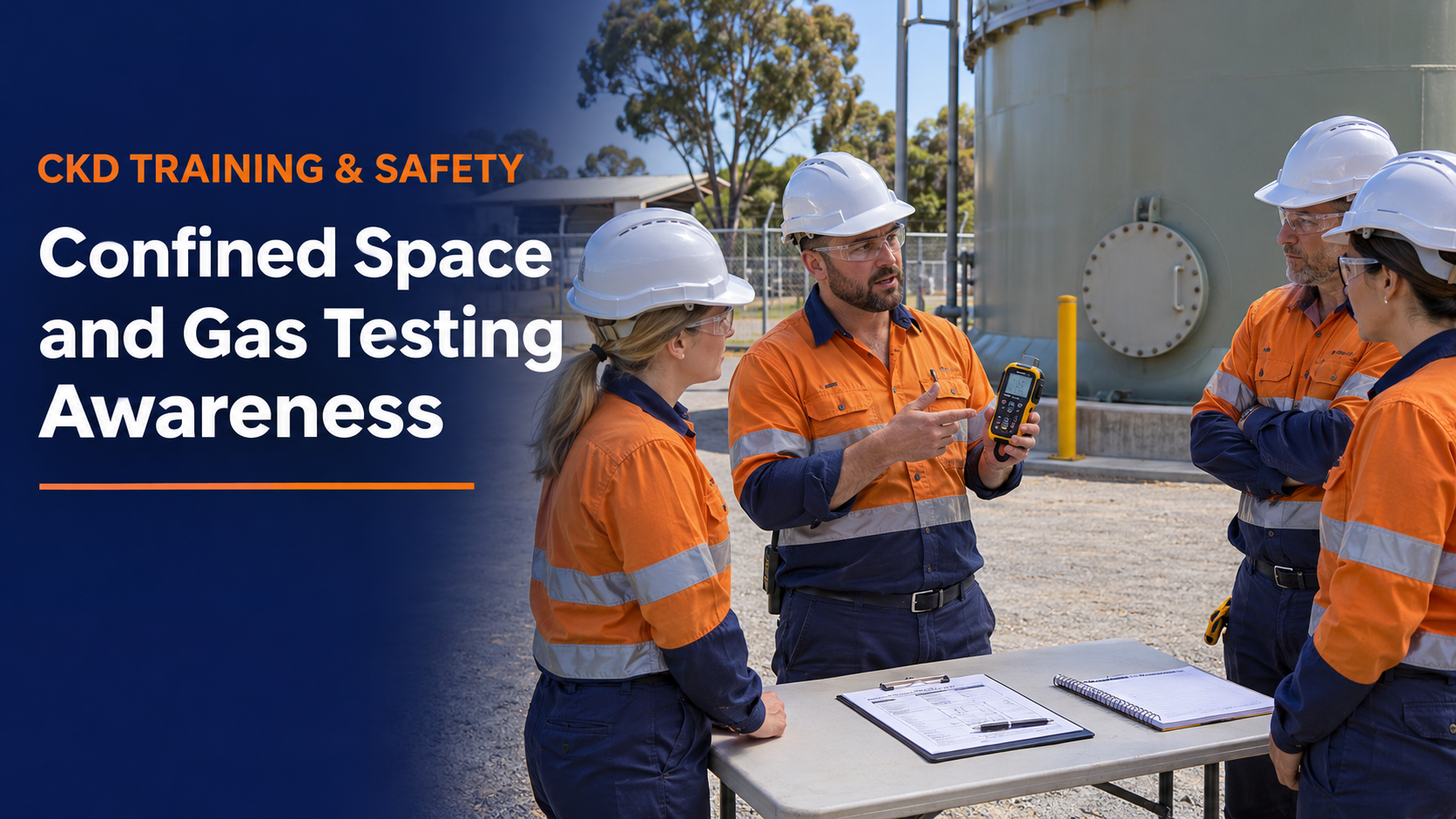
Understand the hazards. Know your responsibilities.
Recognise confined spaces, understand entry controls, atmospheric hazards and gas detector limitations, and respond to alarms without creating another casualty.
Twelve reading lessons across six modules, six knowledge checks and a 15-question final assessment. Self-paced learning with saved progress, feedback and unlimited assessment retries.
Complete the lessons and assessments to earn a CKD certificate of completion.
CKD Training & Safety non-accredited awareness training. This course does not issue a nationally recognised statement of attainment, verify practical competence or provide a licence, permit or site authorisation. Apply the current requirements for your jurisdiction, task, equipment and workplace. Completion does not authorise confined-space entry, gas testing, permit issue, standby duties or rescue and does not assess practical equipment use.
Content uses Australian regulator guidance and the public scope of relevant standards. Model codes require local adoption to have legal effect. Standards are technical references, not course accreditation; their applicability depends on legislation, design, contracts and the task. Technical decisions require the current controlled documents and competent review. Content reviewed 14 November 2026.
What you’ll learn
- Recognise confined spaces and role limits
- Plan work without entry where possible
- Understand atmospheric testing
- Interpret results within the entry system
- Communicate and respond to emergencies
- Close out, report and keep records